Articles
Care and later living: building the planning case around people and place
Adrian Kearly, Consultant
5 November 2026
Care and later-living schemes need a planning case that connects residents’ needs with local housing choice, community ties and services. Evidence should show what the development would deliver for people and place.
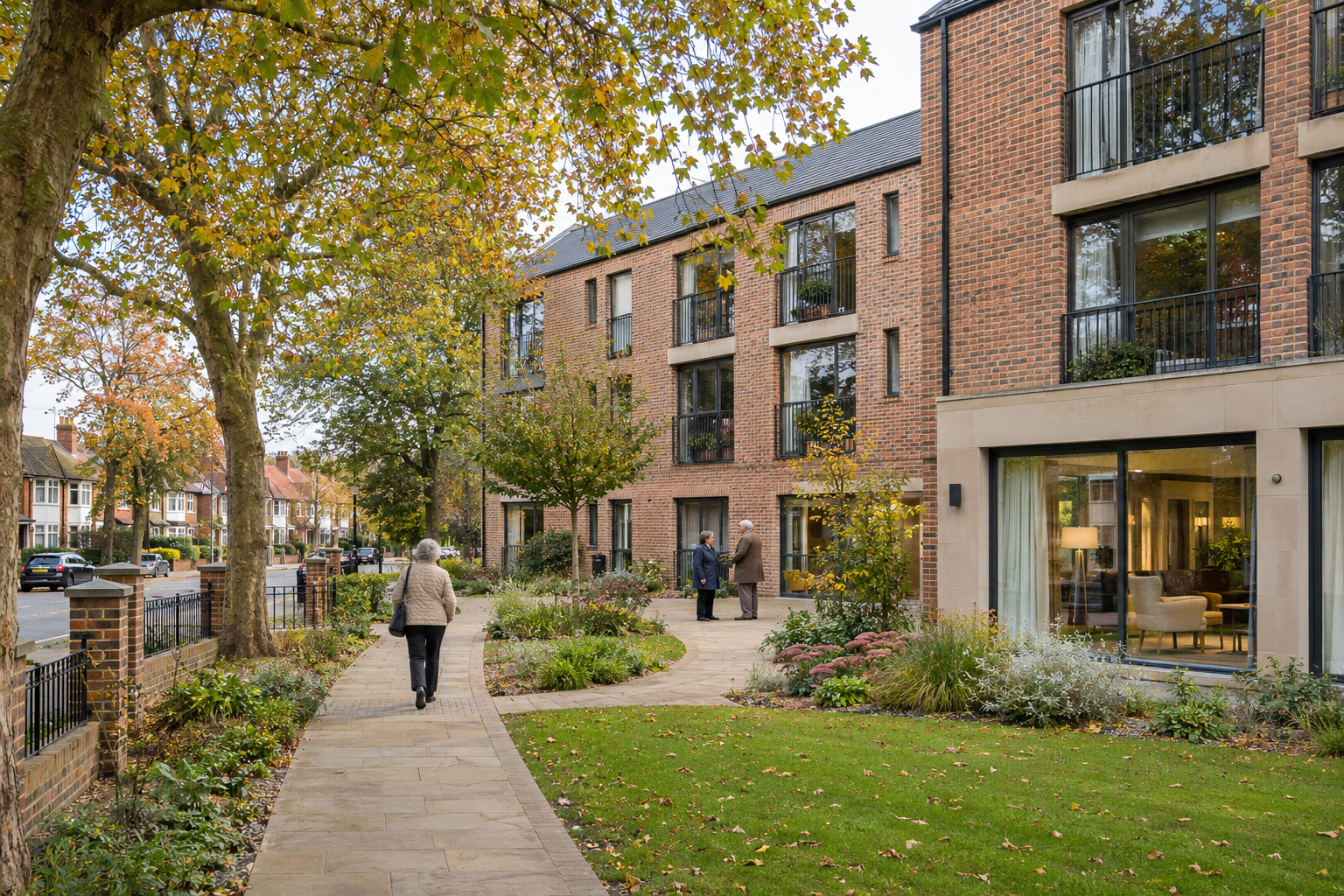
A care or later-living scheme can offer much more than accommodation, but its wider value is easily lost if the planning case begins and ends at the site boundary. The stronger argument connects how residents will live with the choices available locally, the community they belong to and the services on which they rely.
That starts with understanding the proposal. Age-restricted housing, retirement housing, housing with care and residential care homes meet different needs. Their staffing, support and communal facilities shape both the design and the operation. They also inform the appropriate use class: the level of care and scale of communal provision matter more than a label such as “retirement community”.
Yet a clear operating model is only the beginning. As people grow older, their circumstances change. Many want to remain at home; others need somewhere more manageable, additional support or residential care. Where suitable accommodation is unavailable locally, moving may mean leaving familiar places, friendships and family networks. Providing an appropriate alternative can make remaining part of that community a realistic choice.
The evidence of need should make that connection explicit. An ageing population is useful context, but it does not explain what a particular scheme would achieve. The planning case needs to identify who is poorly served by existing provision and how the development would improve their options. In my experience, that is where a general demographic argument becomes a convincing account of local benefit.
The consequences can extend beyond the residents themselves. A move from a larger home into suitable accommodation may release existing housing for another household. Local jobs, spending and links with nearby businesses can bring further benefits. A location close to facilities and social networks may also support a more sustainable pattern of living. These contributions should be evidenced for the scheme concerned, rather than presented as automatic consequences of specialist accommodation.
The same discipline applies to concerns about healthcare and infrastructure. Pressure on local services is a legitimate issue, particularly where capacity is already constrained. It needs to be understood through the proposed operation and local circumstances. On-site care, nursing where provided, and coordinated arrangements with visiting healthcare professionals may help manage residents’ needs. Whether those arrangements reduce particular demands on external services requires evidence; it should not be assumed.
For landowners, developers and operators, bringing these questions together early helps align the acquisition appraisal, design and planning strategy. It also gives the team a firmer basis for explaining the scheme’s benefits where policy constraints make the planning balance more demanding.
Specialist need, housing choice and community benefits may be significant considerations, but their weight depends on the evidence and the policy test. Where Green Belt development is inappropriate, very special circumstances must be demonstrated.
Neither a care label nor a list of potential benefits provides a shortcut through those tests. The strongest planning case shows how a deliverable operation would meet a particular need, addresses its impacts and explains what the community would gain. People and place belong in the same argument from the outset.